
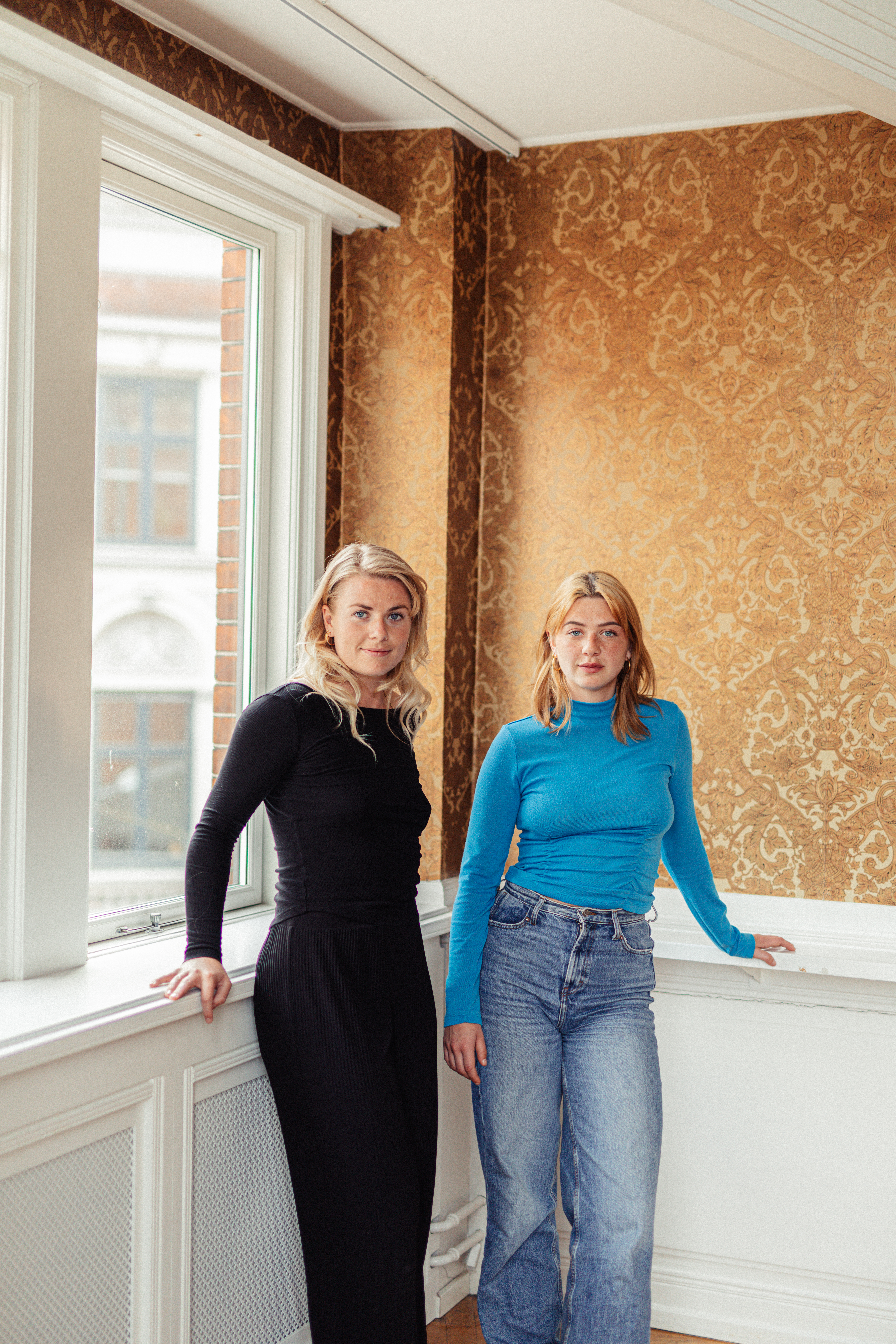
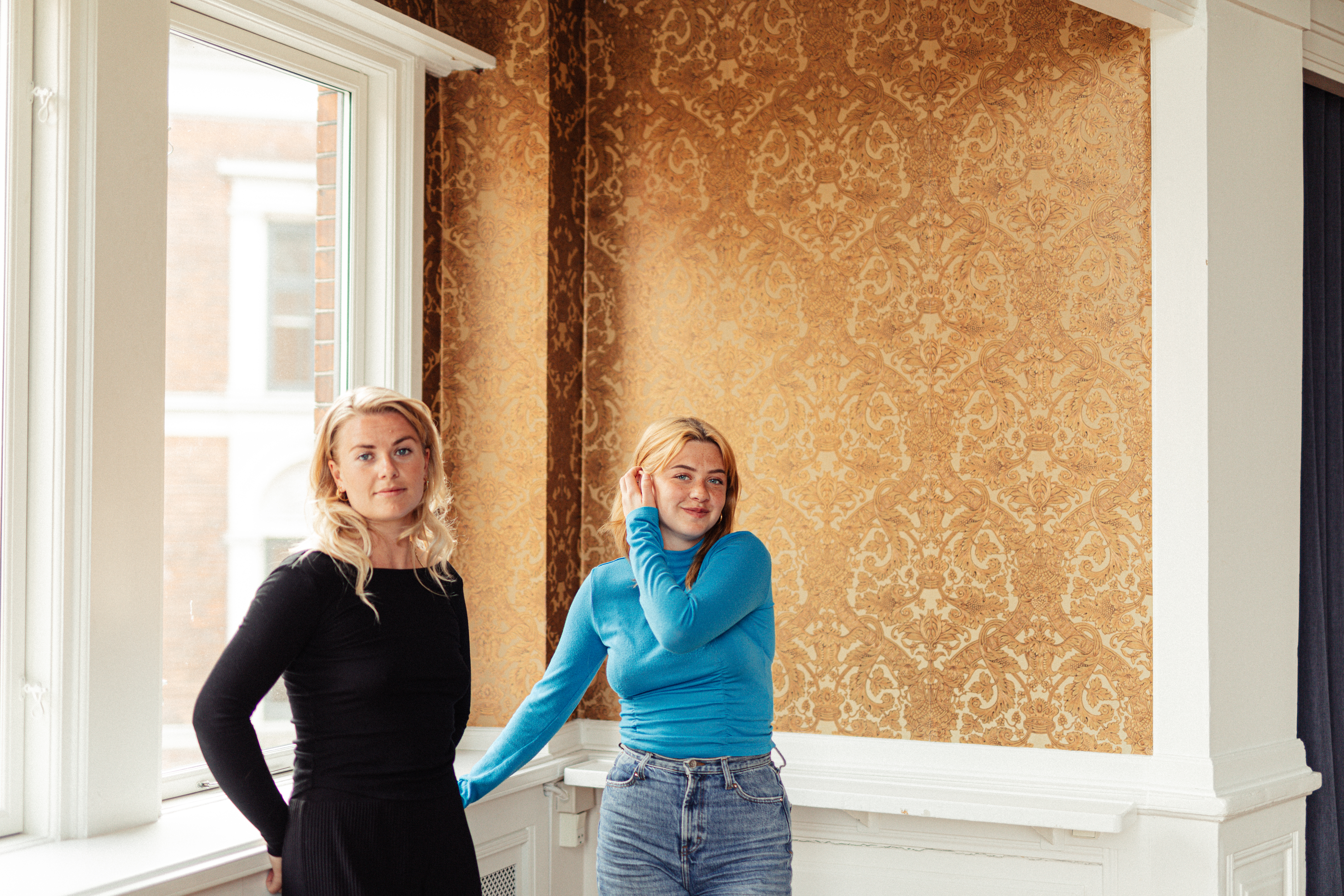
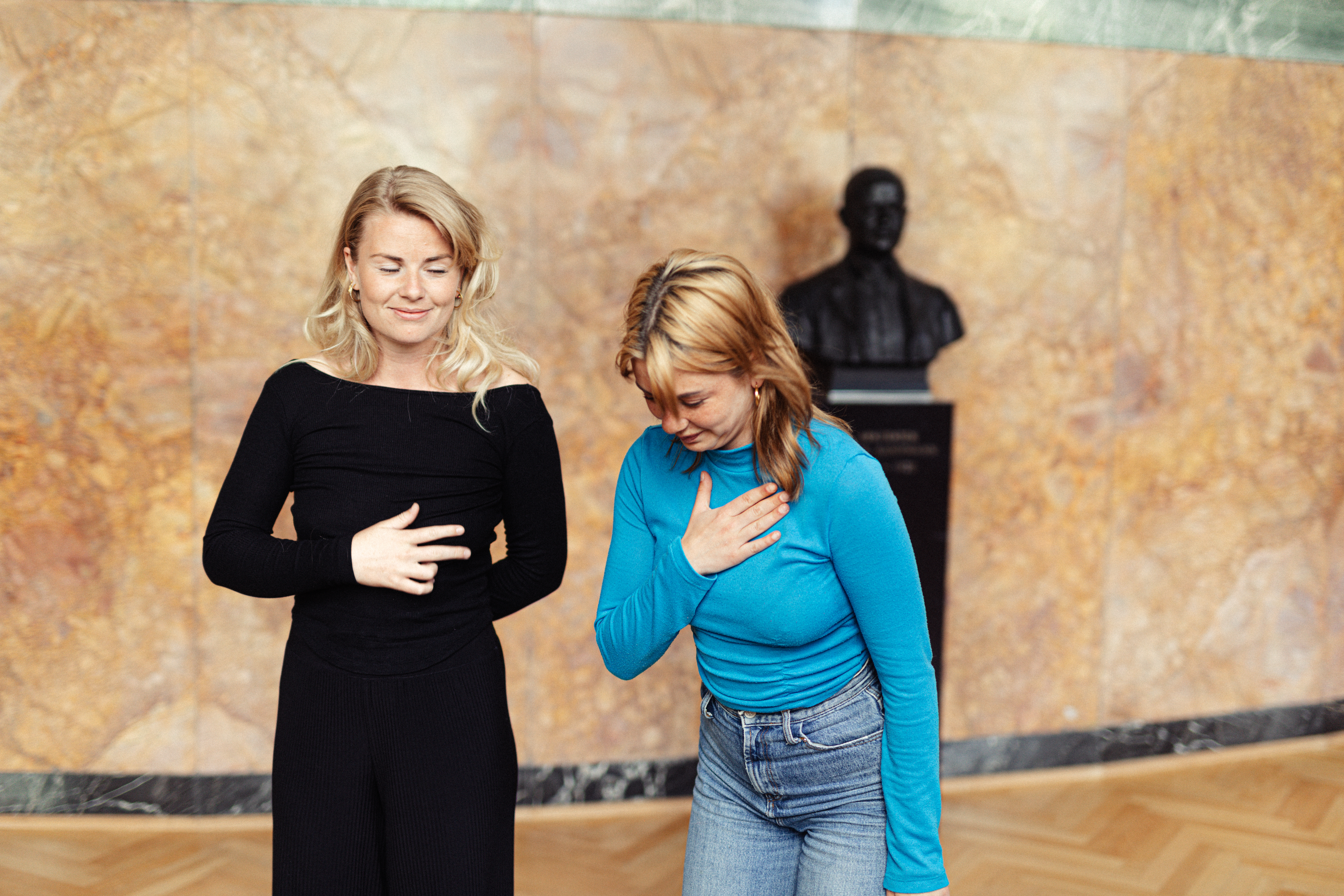
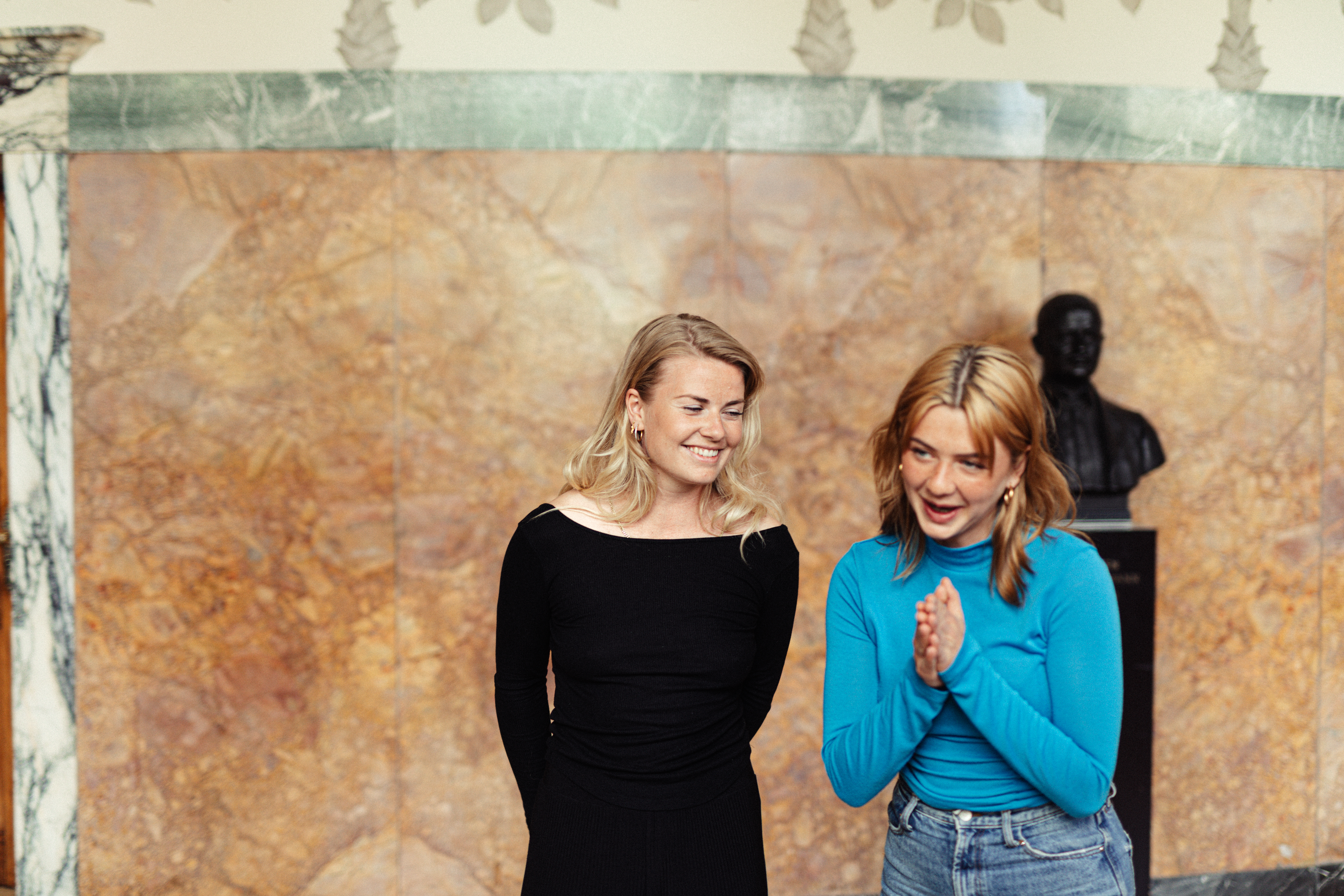
We met up with two inspiring talents from the second & first year of The Danish National School of Performing Arts Acting Education at Århus Theatre; Amalie Husted Mørup & Ida Mia Appel.
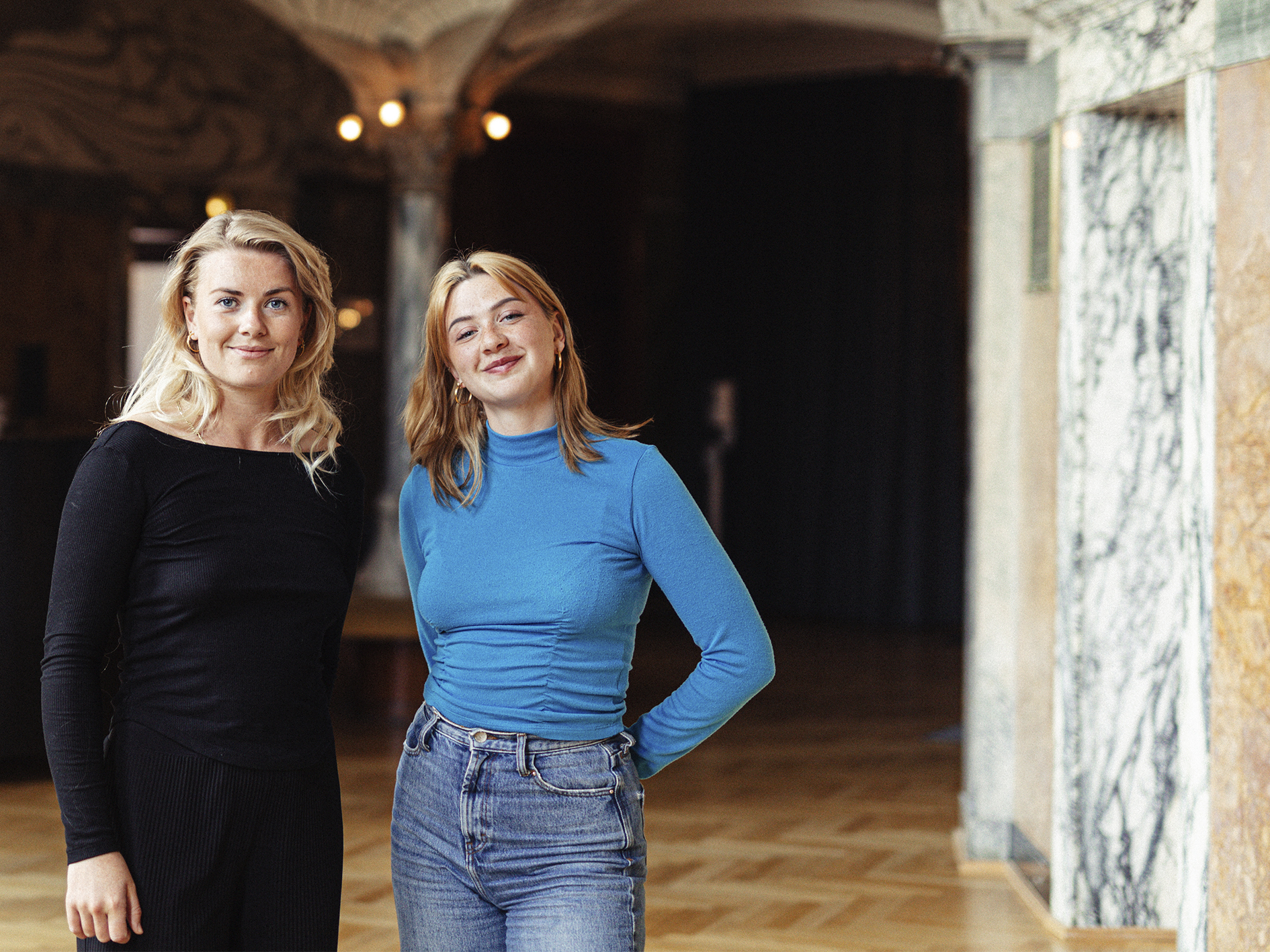
It has been a long time since we have set foot inside the beautiful architectural gem build around the 1890’s by Hack Kampmann. – And what a shame, because there is something magical about this place.
Not all things can be experienced through a screen. Some things must be shared in the now. On a stage. In a room for creativity, and talented people expressing stories; words, thoughts, tragedy, comedy, deep contemplation or lively entertainment through themselves. Expressing life live.
But what does it really take to make it to the stage?
Lets begin at the beginning of the journey.
What does a “normal” day look like for you guys, and how is the education in reality put together?
Amalie starts explaining about her second year: “There is an ongoing basic course covering vocal training, singing, accompaniment, manual treatment – where everybody gets individual practice with “down-to-the-bone”-techniques for 30 minutes each.
We also have courses, where an extern guest teacher will take us through different acting techniques and dramatic training. But that is just an overview of what our schedule looks like.
Both Mia and I have solo tutorials approximately two times a week.”
– Ida continues: “Yeah, so for example we might have a singing class and accompaniment Monday, and then Thursday solo tutorials and vocal training. But there are more courses on the second year, than on the first with different guest teachers week at a time. The first year is more technical, and also very physical. We have had a lot of different physical courses spanding from physical contact improv to acrobatics.”
Amalie: “All the permanent teachers we have, they are so comitted and passionate about not only the education, but really all of us as individuals, and our art. Now I use the word “art”, but what I really mean is all of us as actresses and actors. They are so involved and personally invested in our development, growth and evolving process throughout the years at the school. – And you really also have to get used to that, because suddenly you have all that attention on you all the time.”
So your teachers really are mentors to you?
Ida: “Well, in a way. The permanent teachers are always there to talk to 1-on-1 to ensure that you are on the right path, and also go through what you need to work on in order to improve and succeed.”
It must be really important to always have them as your biggest supporters, since it is an education that can be very challenging personally. You have to work with yourself, be vulnerable at times and also evolve as individuals.
Having talked to other actresses that finished the education, some of them even explained, that just by looking at class photos from the first year and to graduation, you can tell that the students have undergone a major transformation that shines through the lens?
Amalie: “Everybody deserves an education like this. Seriously. And the teachers we have, they are kind of mentors, but they don’t want to take on that role, and dictate everything, because they don’t know the truth either. So they are not teachers in the classical sense, and they are not therapists either. Still they can’t help becoming that in a way, because we are working with ourself, and on ourself all of the time. This is what I mean by everybody deserves to experience this form of teaching for at least one year. Really getting to know yourself, your body, voice. That is essential.”
Ida: “You are really digging deep, and getting to know yourself, and what your weaknesses are. It does become a psychological journey. If you have trouble expressing a specific emotion, you need to figure out, what do I have to do in order to dig out those specific feelings? What do I have to do to get to that place? What makes it difficult to get to that place, and what are triggers? And then you need to know how to tap into it.”
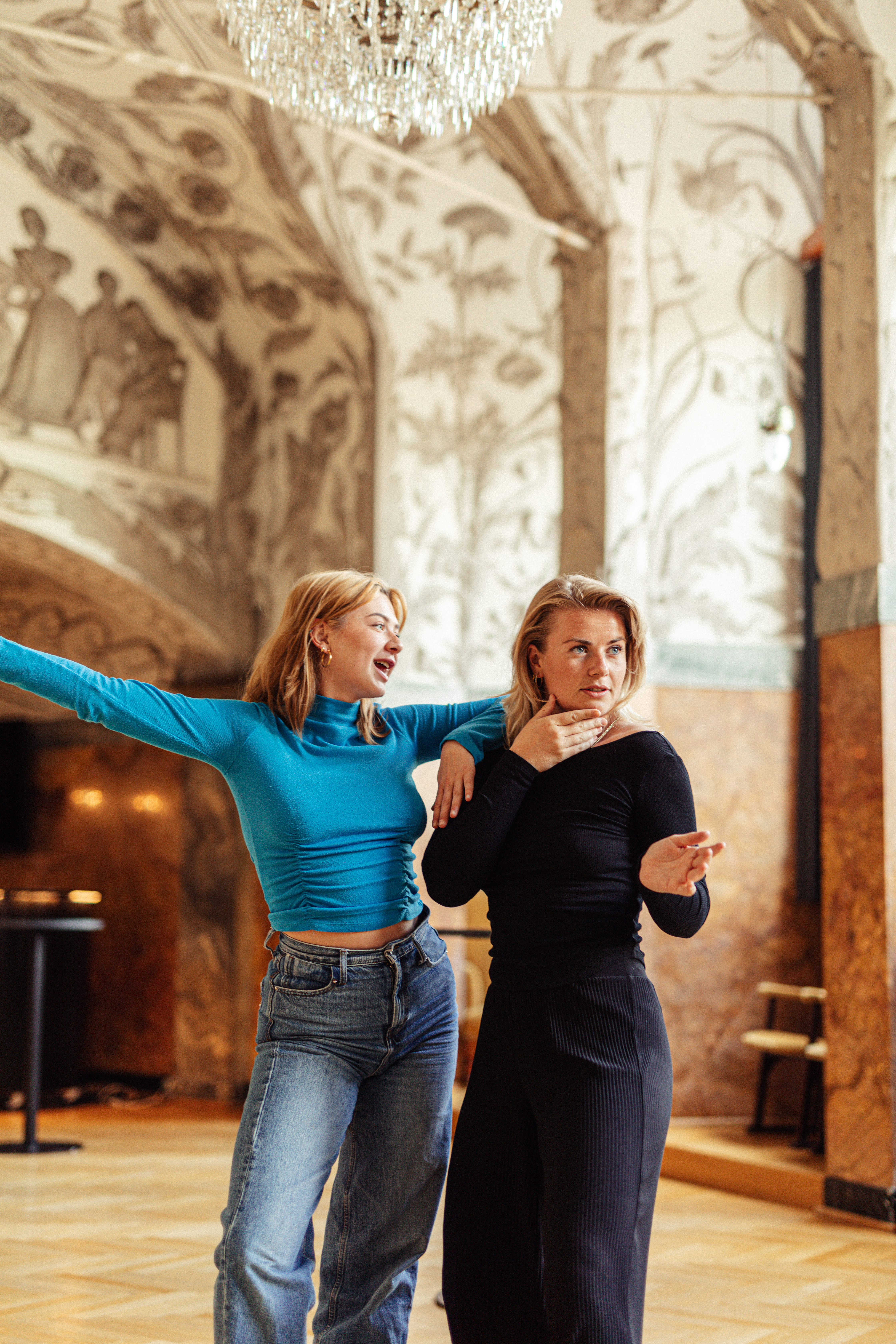
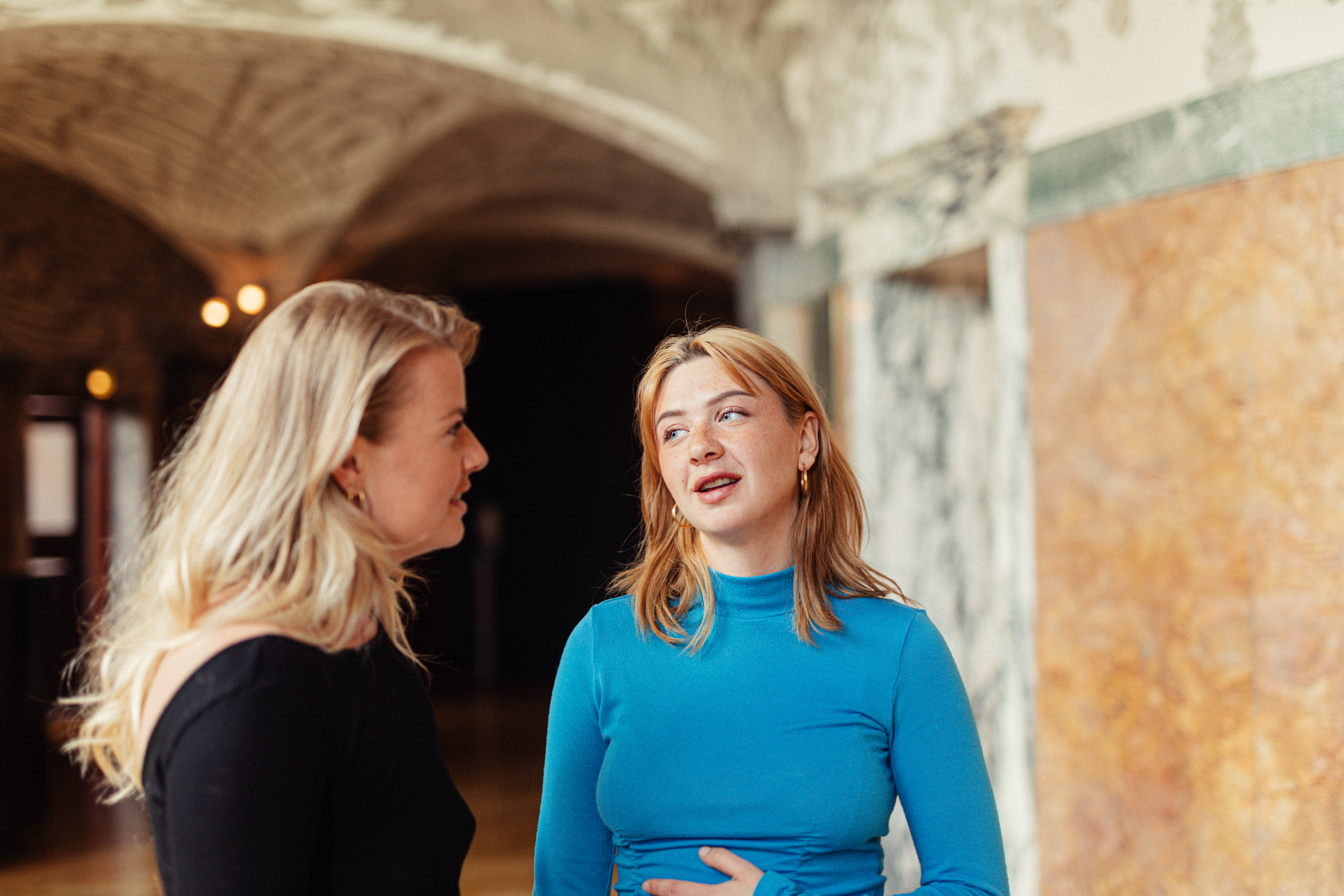
Are you sensitive beings?
“Yes, I am.” Ida replies with a beautiful, huge contagious smile.
Amalie: “I really didn’t think that I was very sensitive at first. I really didn’t. And I come from a very hardworking, working class family, that is all about “bite into the sour apple, and move on.” – Very much all about the power of action, the power of moving forward. And do your thing. But I found out that I am. I am very sensitive. And I had to come to terms with that and accept it”.
But isn’t it a good thing to be sensitive, or in touch with your feelings as an actress?
Amalie: “Yes, it is. For sure. If you have the tools to work with your feelings and vulnerability. And I don’t think I was able to before studying. There is something about being sensitive, but learning how to wrap everything up inside, to protect yourself, until you become tense. And it physically manifests itself in your body. And you try to not let it out. Or keep it down. The older you get, naturally the more armour you put on to protect yourself. I think that is pretty common for all people growing up. But here we have a room to cast the shields and feel safe while doing so. It is, I guess, up to every individual to allow themselves to feel. We are just fortunate to explore that daily in a room that naturally and “safely” lets us do so.“
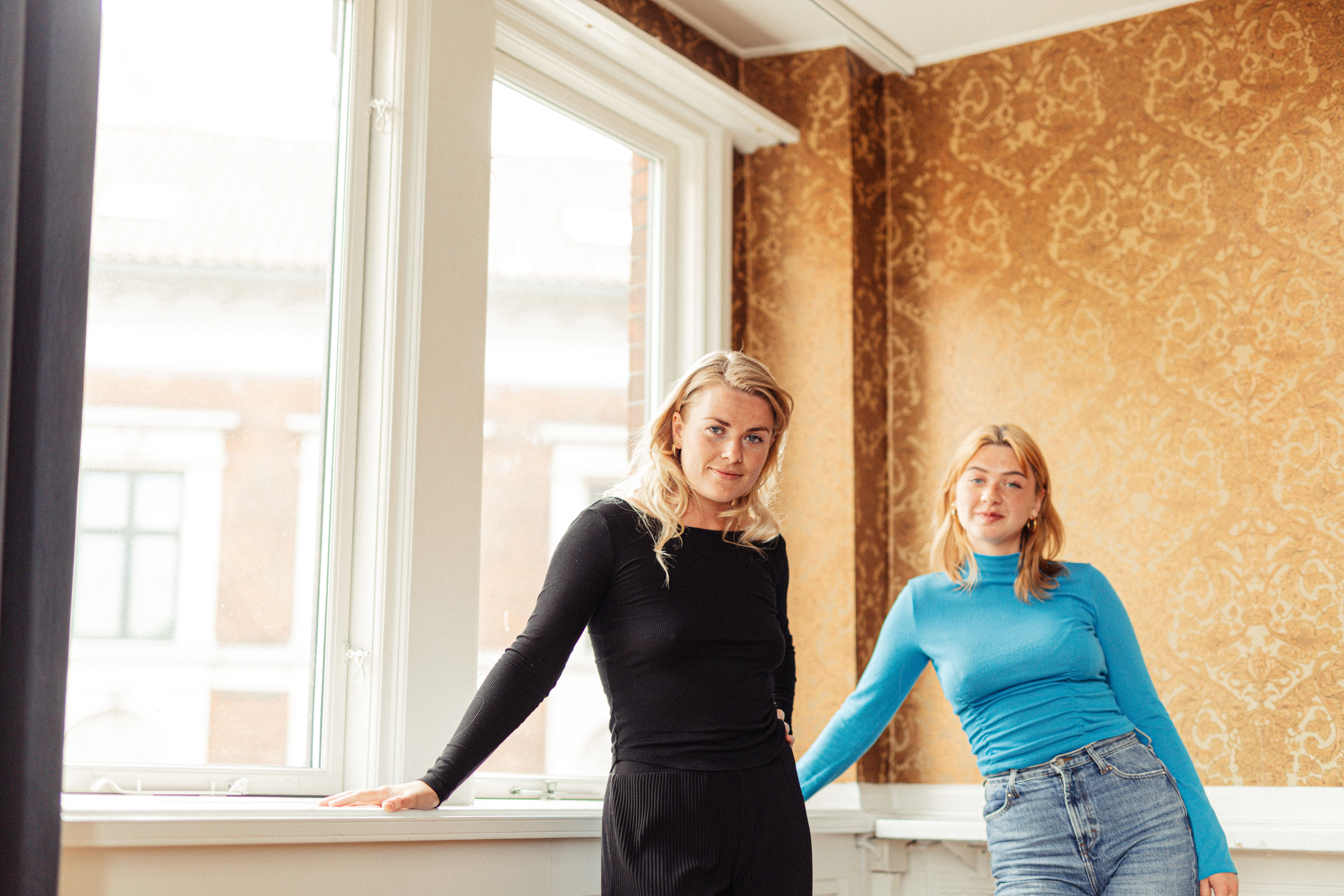
So how is the dynamic of the students in each class? We know how hard it is to get accepted into the school. You mentioned that you guys are all very different? Is that the intent of the school ?
Ida: “Well, to my knowledge, it is pretty random who you end up with in class. They do not accept students based on how well they will fit into the group. It is just ‘Here goes nothing’ all the way, and then you of course have to be a good colleague, and try to support and understand, how eachother work best together.”
Amalie: “It is kind of like a forced marriage.”
We are all giggling.
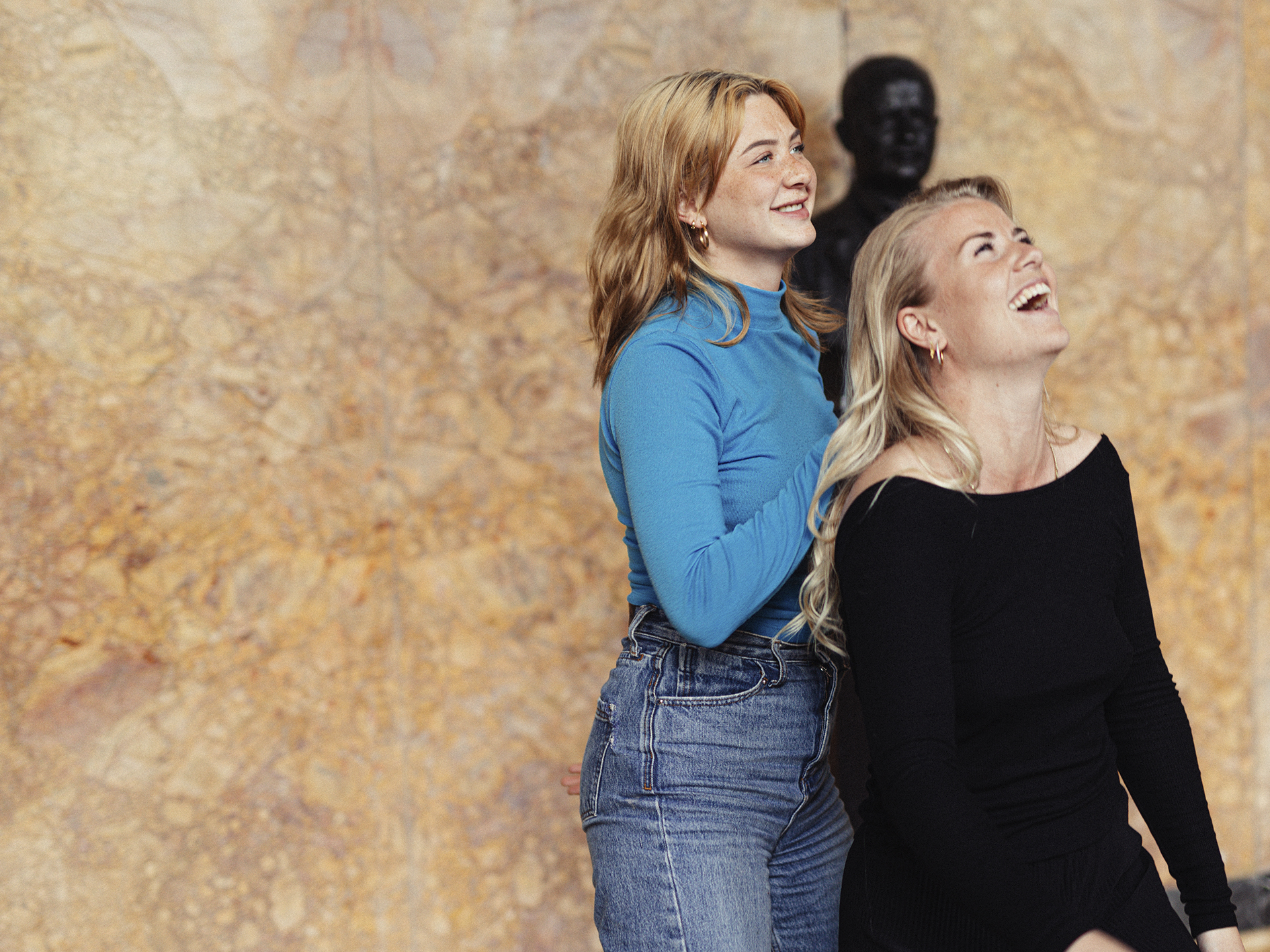
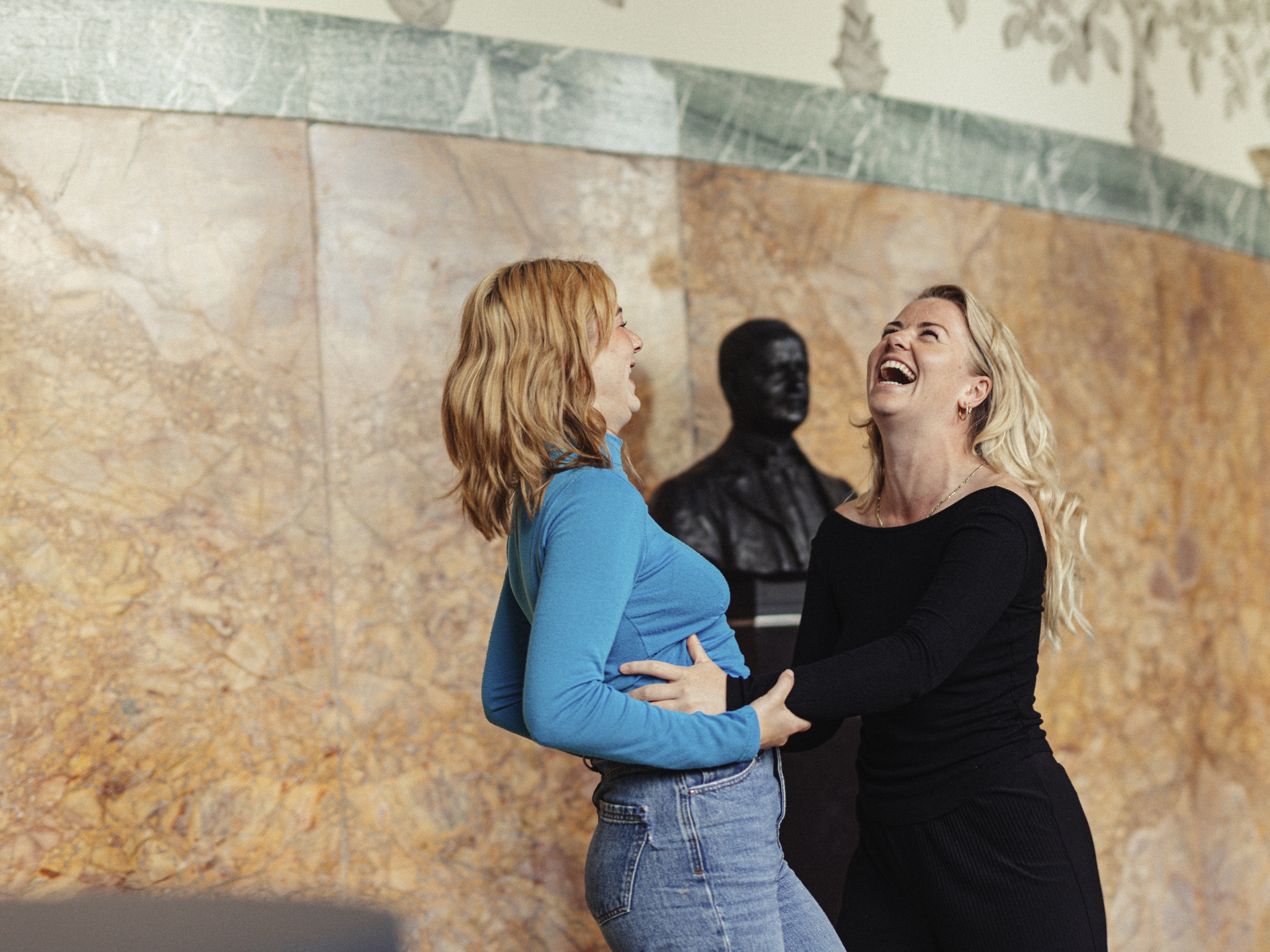
Amalie: “You really have to get used to it in the beginning. We are super close in school, but don’t have to be, when we are off. But now we have naturally become good friends, eventhough we are completely different, – and maybe that is a really good thing. I think being insecure about everything in the beginning makes it more difficult to get to know eachother, because you feel you have to prove yourself and your skills. And those insecurities can sometimes clash.”
You are a small group of 6-7 people that made it through the eye of a needle. You have been through three entrance exams in order to get accepted. What did they involve?
Ida: “The first entrance exam is a monologue. The second varies a bit espescially due to corona, so we had to send in the first monologue recorded. We had to do a new monologue for the second entrance exam, and also a dialogue and a song, and then the third is a 4 day ongoing entrance exam”.
And how many years did it take for you to get accepted?
Ida: “I got accepted in my second try”.
Amalie: “And I did in the third try”.
Is there an average amount of tries?
Ida: “It is so difficult to say, because for some people they try out for 5 years in a row. It could even be more. And one from my class got in on the first try.”
We both have ex-colleagues that have tried up to 8 times, so we know how difficult it can be. Some never get accepted. It is really tough.
Ida: “We have many friends from acting academies, and they are so talented, yet they can’t get accepted. And you are just wondering why. There is a huge mass talent out there.
But many things can happen, when you are being examinated. And you get to experience that first hand on your first year. You can instantly tell during examination, if people got it or they don’t. It is the harsh truth.“
Both agree it would be too much, if they accepted more people into each class. There would never be enough time for everybody.
As an audience and guest, we often see the same people. We miss some diversity on the theatrical scene sometimes. Both on the stage and on the screen aswell. It is kind of a shame, when we know how many talents are out there?
Amalie: “Yes. But there is just something about being a ‘name’, which makes it easier to sell tickets. It is like that everywhere. You have to take a much bigger chance with other talents, and then a lot of people probably just go for ‘the safe choice’.”
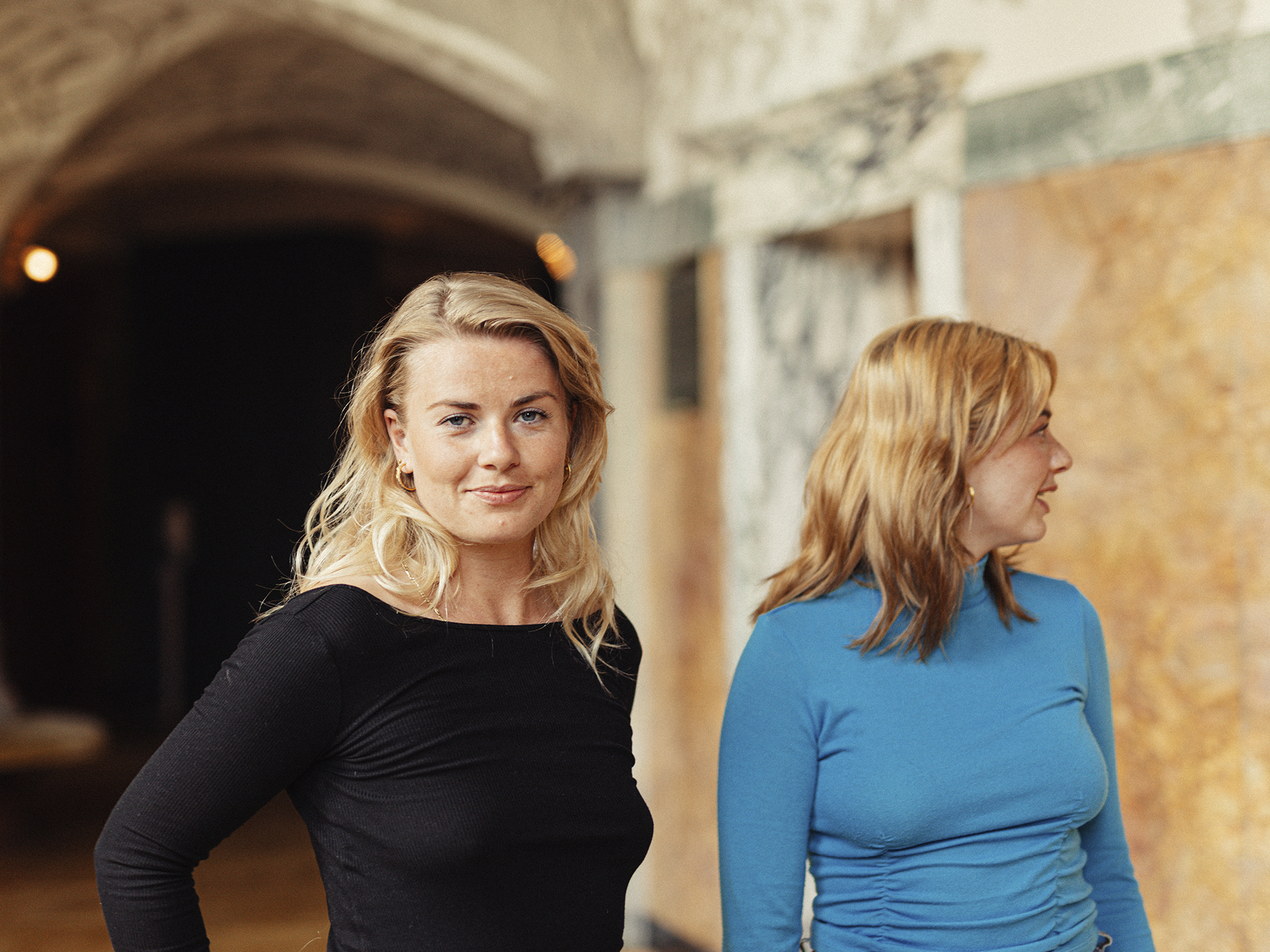
We know economics will probably always be a big factor in making those decisions aswell, but do you think the future might be opening up for more diversity on stages and screens? Have you seen a kind of trend or development in that direction giving the times we are living in?
Ida: “You can tell that there has been changes in the way that people, who are not necessarily educated actors or actresses, are slowly making their way on to the stages in different theatres. And the whole industry has opened more up towards getting people to Hollywood even. It is no way near easy, but there has been a colossal change. Everything is somehow within reach.
But you can never change the attitude leaning towards ‘the safer choice’ in order to get people to watch a play. That being said, I know casters are also on the look for diversity and talented people, who are not in the spotlight already”.
Amalie: “There are theatre chief executives out scouting for talents for their stages, because they fear streaming services will take a huge bite of ‘the mass talent cake’ in the future. Which is good for us as actresses.”
Ida: “The streaming services provides so many shows for our generation as-well. It is booming.”
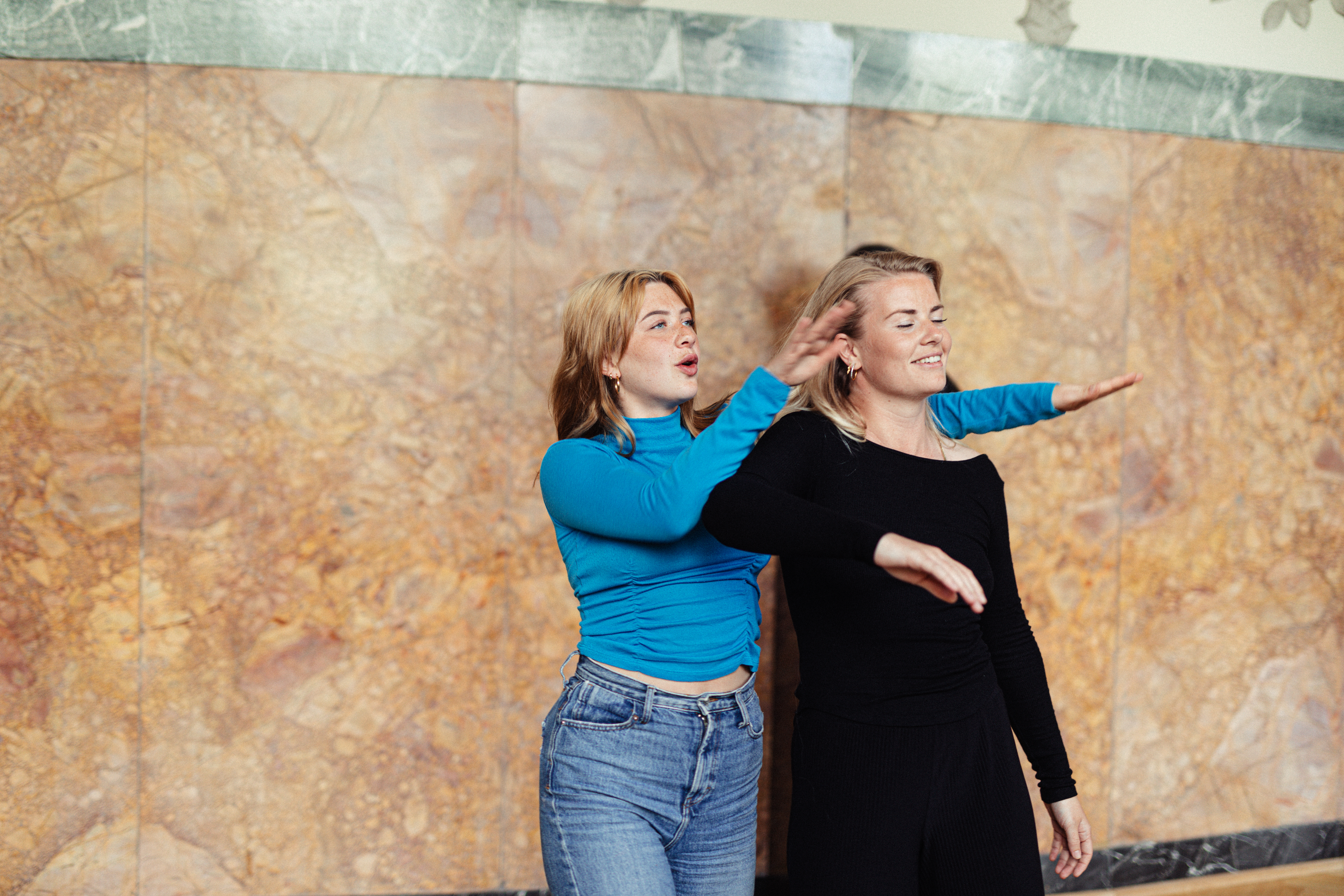
Where do you see yourselves in the future? Do you dare to dream in this harsh industry?
Ida: “I think it is mix. But I have big ambitions. My mom is an actress, so growing up I fell in love with the theatre. But being older now, I have fallen in love with movies and television even more. I would love to do everything, but as long as I can pay my bills I am happy. I am still young, so I still feel everything can happen. And thinking about the possibility of working abroad is just so cool. When my mom graduated, she did not have the same opportunities as I have. I kind of feel like the world is my oyster, and it is up to me to make the best of it. And now a days people will not tell me i am a fool for dreaming big, like they would back in the day.“
Amalie: “It is a lifestyle. And I can’t imagine doing anything else. Despite the difficulties, and what comes with the job”.
Amalie: “No matter what you throw yourself into, there is always a chance, that you will fail at it. And I would think, that it must hurt a lot more to fail at something, where you have settled for less, rather than failing at doing something you love“.
We say Amen to that, Amalie.
What do you think the theatre offers that streaming services, television and the movies don’t. Because sadly we don’t go to the theatres as often, which is the case for most of our friends and piers also. We talked about how streaming services produce alot of shows for our generation, but what does the theatre offer, that we should keep in mind next time we seek entertainment?
Amalie: “It depends on a lot of things. And there are as many bad movies as there are bad plays in the theatre. But a really beautiful thing about the theatre experience is, that it is real life – unedited. It is happening in the moment. There is another presence, especially in plays that engage the audience.. My goal is to become so good that my audience will feel some kind of symbiosis or friendship with me from the stage. The wildest thing is truly to feel a connection towards the actor or actress on stage telling a story. It is so crazy, wild and intimate. And there are no limits for the theatrical world in a way. If you are good, you will be able to convince your audience about anything, you tell them. You can’t do that in the same way in a movie.”
Ida: “It is just magical. Everybody in the same room. In the now. Not on the phone, but in this magical place where everything can happen unedited. And I have so much respect for the theatre, and wish that more younger people would use it more often. You can learn so much, and take so much away from it. Also because the topics or themes often are really relevant. I know it is the same for alot of movies, but still it is more real to handle those themes every night on the scene in front of an audience. The whole perfomance just demands so much respect in return. In a movie, you have the possibility to do many takes and edit, but on stage you have that one chance every night.”
Do you have any rolemodels?
Amalie: “I have many. From Willem Dafoe, Benedict Cumberbatch to Jennifer Lawrence just to mention a few, if we are talking US actors and actress. But the weird thing, we have wondered about, and recently talked about, is that we somehow always focus on male actors and forget about the female actresses. It is most likely a cultural, societal thing, which we are becoming more aware of giving the times we are living in.“
Ida: “The guys from my class were really surprised about that. Because they could ‘career-envy’ both different males and females. But I would ‘career-envy’ males foremost. There are so many talented women. But it is like the cool roles have been written for men. They would have better opportunities to truly unfold and express themselves. It is not about the talent more about the industry. And roles that lets women play more than an annoying ex-wife or something like that.”
Amalie: “I try to focus more on female actresses now. And keep all the cool women in mind. And we have so many talented female playwrights. There is a lot of hope for us in the future.”
Amalie: “- When we had Thure Lindhardt as a guest teacher he made us play different terrible scenes from television with roles as women doing dishes, or being angry at their husband for not picking up groceries. The point was that it is impossible to turn that character into something great, no matter the talent.”
Ida “And we went through the same thing with a caster. Because some roles are just written to be a support for the main character or just deliver a message.”
We are cheering for both these cool women, and are keeping an eye on them in the future. Just FYI these girls are participating in the PROLOG festival which is from the 4th to 6th of June. Amalie will be starring in ‘En skærsommernats drøm’ by William Shakespear. And Ida will be starring ‘Jeg var sikker på det var en elg’ written by Frida Lea Fugl. It is free, so get your tickets here.
If you are in Copenhagen, Amalie recommends ROCKY! with Morten Burian.
 låcals
Skriv en kommentar