
By Drude Therkildsen Bill
Photo Esther Cæcilie Lock-Hansen
We are sitting around the table at the shoemaker’s home in The Old Town. It is Christmas Eve in 1864 and the white tablecloth has been placed on the table along with a single candle. The whiteness of the tablecloth reflects the light, as the family gathers around the table to enjoy the serenity and escape the darkness of the cold December nights. Today most of us expect to see lavish Christmas decorations lighting up streets and malls with such an intensity, that you can barely even see it. Light has always been an integral part of December even before Christianity reached Denmark. We asked Museum Assistant Birgitte Damkjer to show us around The Old Town and tell us the stories of how people used to find comfort in the light during the darkest time of the year.
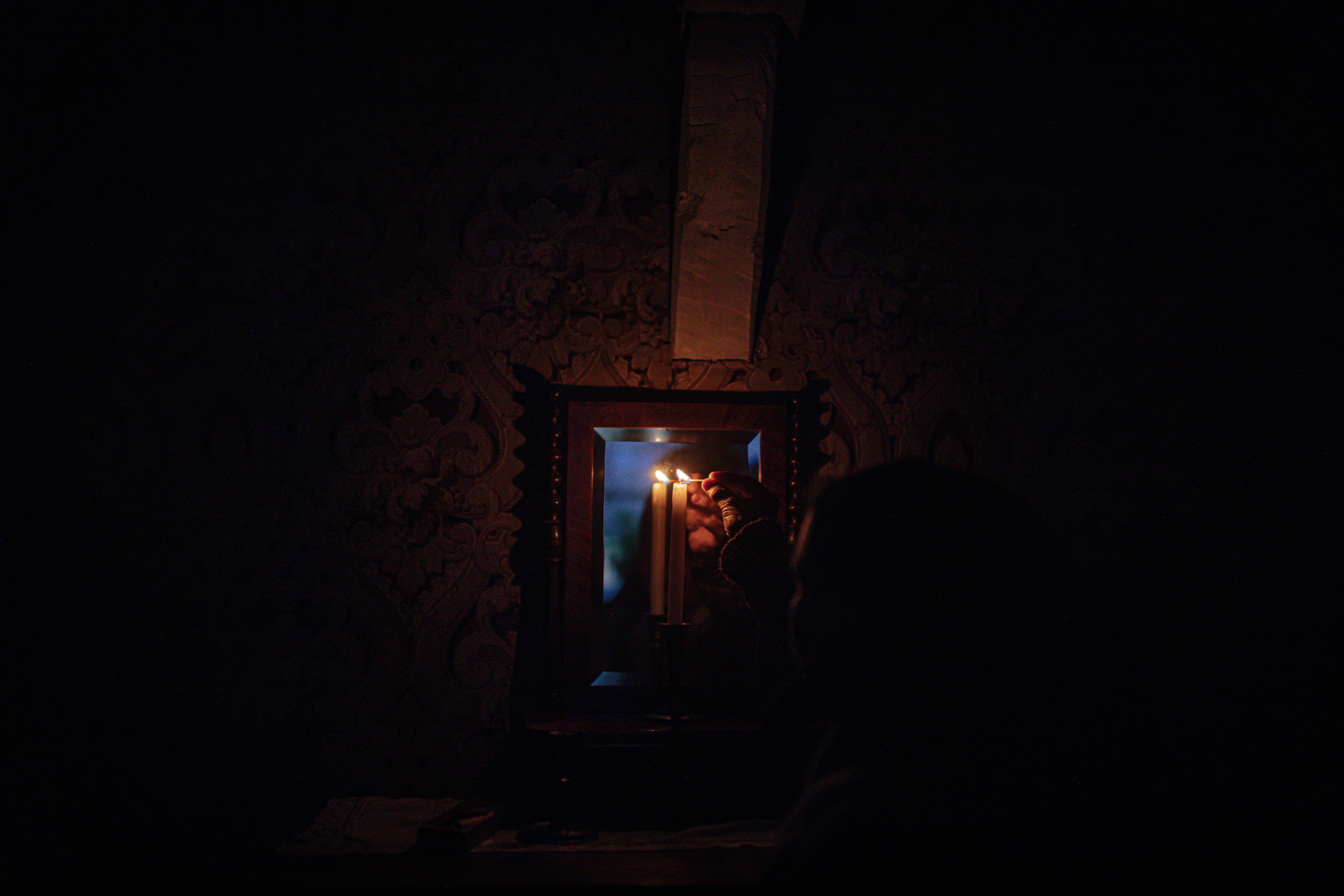
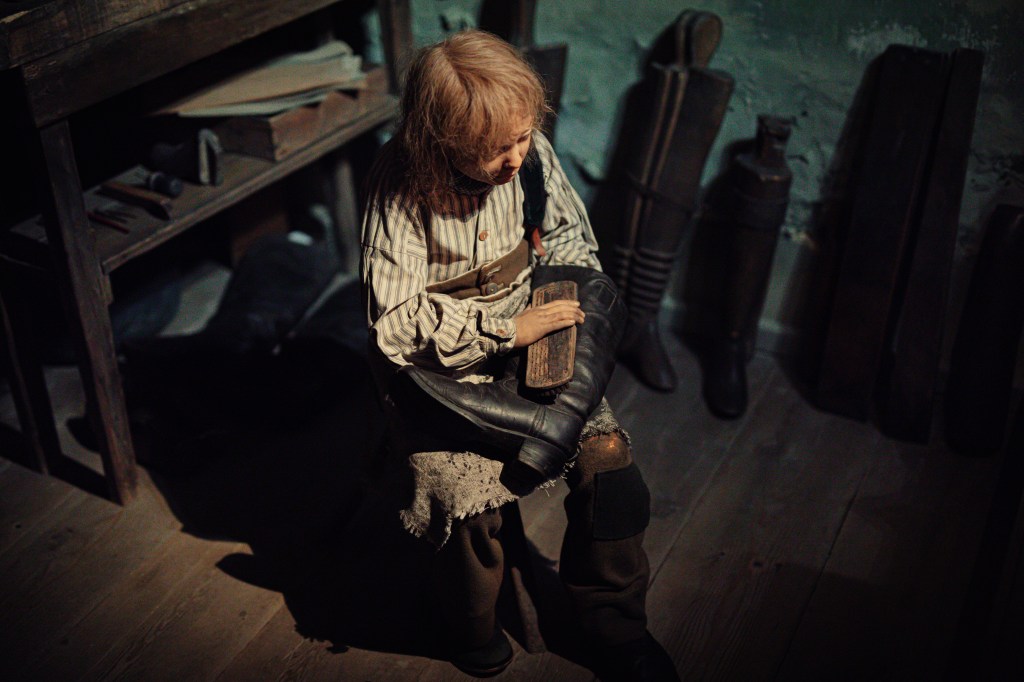
Christmas lights have become such an integrated part of the Holiday, that the idea of cutting back due to the present energy crisis has been framed like Christmas was cancelled all together this year. It is no coincidence, Birgitte explains:
“Light was a part of the feast in the north at the end of December. It was a way to get through the dark winter and celebrate the slow return of the sun, even before we became Christian. Later, it became a way of celebrating the birth of Jesus – the light in the darkness. A regular middle earning family such as the shoemakers’ would have had 12 candles for a year’s supply – most of them used during Christmas, which was celebrated from Christmas Eve until Epiphany on January 5th.”
Today Christmas start with the first decorations and advertisements in October, and in the 19th century Christmas also began with preparations throughout November and December.
“November was the month of slaughtering farm animals. This meant people had access to more lavish and special dishes such as a goose, ham, sausages and ‘Klejner’ [Danish biscuit] boiled in pork fat around the time of Christmas. Biscuits and sweets was a rare treat due to the astronomical prices of sugar and therefore considered almost like presents – if you could afford it.”
In 2022, we became aware once again, of the luxury of sugar and the expense of heating up a house when King Frost has his grip on the land. In the 19th century, people experienced a small ice age with a decline in temperatures resulting in more snow and ice during winter. You can easily imagine a cozy and idyllic picture of people gathering around the fireplaces and lighting a few candles. But the reality was much more harsh.
“People wouldn’t have had the fireplace going during the day. It was too expensive. They might light it up in the late afternoon after the fire in the kitchen had died. Instead, people headed to bed early to save the light, heat and energy during the dark hours. If it was too dark to work, people simply went to bed. The modern 8-16 rhythm was not an option during winter, until the invention of electric lights along with a demand for workers at the factories at certain hours.”
Imagine going to bed and turning off the lights due to the cost of staying awake? And what about Christmas trees, decorations and presents? Even though regular people might had to settle for an extra candle on Christmas Eve, more well off families began to decorate Christmas trees with decorations, presents and sweets from the middle of the 19th Century and onwards. The tradition was imported from Germany, but quickly became a Danish national symbol complete with red and white paper hearts and Danish flags.
“In 1866 Herluf Jensenius published ‘Peters Jul’ [Peter’s Christmas] and it soon became a template upon which the ladies of higher society planned Christmas Eve.” Birgitte explains. “In the Merchant’s Home you can really sense Christmas. In this home, the children are given presents – notice how someone has taken a bite from the biscuit hanging on the tree? This is why you hold the hands of the children while walking around the tree.” The home is surely a picture perfect image of ‘Peters Jul’ and if you aim for a Christmas worthy of H.C. Andersen, we advise you to pay the Merchant and especially his kitchen maids a visit. Lights are also a greater part of this family’s life than the shoemaker’s. The tree is decorated with several candles and the living rooms are lid by kerosene lamps [petroleumslamper].
Kerosene lamps were introduced during the industrialization when people began to work in factories hereby prolonging and standardizing the working hours. Darkness was no excuse when the wheels were turning and we slowly moved away from natural darkness and into a world of artificial light.
We move on to visit the little family of the 1920’s. The shops are lid by small, but decorative Christmas lights and the sales clerks have placed several ornaments in the windows to attract customers. Electric lights and central heating are now a part of city life. We arrive to the house and the housewife greets us, accompagnied by a vivid smell of cookies as we open the door to the 20’s. Cookies are now baked in the oven rather than fried on the stove, and gifts and a grand advent wreath reveal a new level of wealth among the middle class. “The little girl of the family wants a big Christmas tree, so her mother has placed it on a sideboard to make it appear taller for people looking in through the windows. They have a Nisse [Nordic elf] on top of the tree. The Nisse gets very popular as a Christmas figure around this time and from here develops into the character we know and love today. The tree also has fragile glass balls, which replaced actual apples around this time.” Both Nisser and glass ornaments has made it to our present time and Christmas at the housewife’s home of 1927 could might as well be at any grandparents’ house. Before moving back to real life, Birgitte takes us for one last Christmas visit in 1974.
“It’s no coincidence that the museum chose 1974 rather than 1973,” Birgitte explains as we walk beneath the bright Christmas lights hanging in between the buildings in a familiar style most of us know from our childhood provincial towns. “If we walked the streets during Christmas in the winter of 1973 there would have been no lights at all.” The Oil crisis of 1973 resulted in an energy crises far worse than what we are experiencing this winter. You may have read some of the many guides and how-to about saving energy that our parents and grandparents lived by during the Oil Crisis. Car free Sundays, astronomic prices and high unemployment rates became the new normal after a decade of economic growth on speed.
However, in 1974 Christmas has developed into the Christmas we know today. “Typical for Danish people it’s hard for us to wait. The 12 days of Christmas from Christmas Eve to Epiphany of 1864 has changed into 24 days of Christmas – from December 1st till the 24th. Christmas calendar shows and calendar lights help count down for Christmas.” Birgitte move us through the rooms of a small apartment into the living room. The TV is showing the calendar show of 1974: Jullerup Færgeby and the Christmas tree is decorated with both real candles and electric lights. “Electric lights made its way to the tree, but most people still placed real candles on the tree to be lit on Christmas Eve.” The lights are still a very important part of Christmas even though modern life has almost extinguished natural darkness. Much like today.
We strongly recommend embracing the darkness and experiencing the tranquil beauty of a single candle when visiting The Old Town this Christmas. If you are lucky, you might get to hear the stories from the kitchen maids or the Shoemaker’s wife yourself. Birgitte advises you to experience the simple life and natural darkness of Christmas in 1864 and visit the exhibition of Christmas through history in the Mayor’s House. “It’s fascinating to see how many of our present traditions has been part of Christmas for hundreds of years – or the ones, which we now consider strange – like putting straw in the living room or ladies wearing a clerical collar.” But one house stands out during Christmas: “In any case you should visit the Merchant’s Home and hear the stories of the kitchen maids.” We are sure to be back for more stories and warm ginger nuts from the Merchant’s kitchen. Merry Christmas.
 låcals
Skriv en kommentar